

Expertise is the raw material
A good expert conversation often provides more useful material than an empty document and a request to “write an expert article”. It contains customer questions, decisions, misunderstandings and examples from actual work. AI can help organise that material, but the underlying knowledge still needs a dependable source.
Choose a bounded subject for the conversation. “Why do enquiries disappear after a website relaunch?” is a more workable prompt than “Tell us about marketing”. Agree on recording and publication before the interview. An internal example may require anonymisation or may be unsuitable for public use altogether.
Build an evidence-based source file
Check the transcript for incorrect names, numbers and specialist terms. Mark passages that are unclear or incomplete. Then separate the main arguments, supporting evidence and potential examples. Put unsupported additions in a list of follow-up questions rather than allowing them to blend into the finished copy.
A useful AI instruction is to group the existing statements around customer questions and flag missing information. Simply asking for persuasive writing does not provide that boundary. Smooth wording can conceal a gap that should instead be resolved with the specialist. Retain a reference back to the original passage so reviewers can check context efficiently.
Give each channel its own purpose
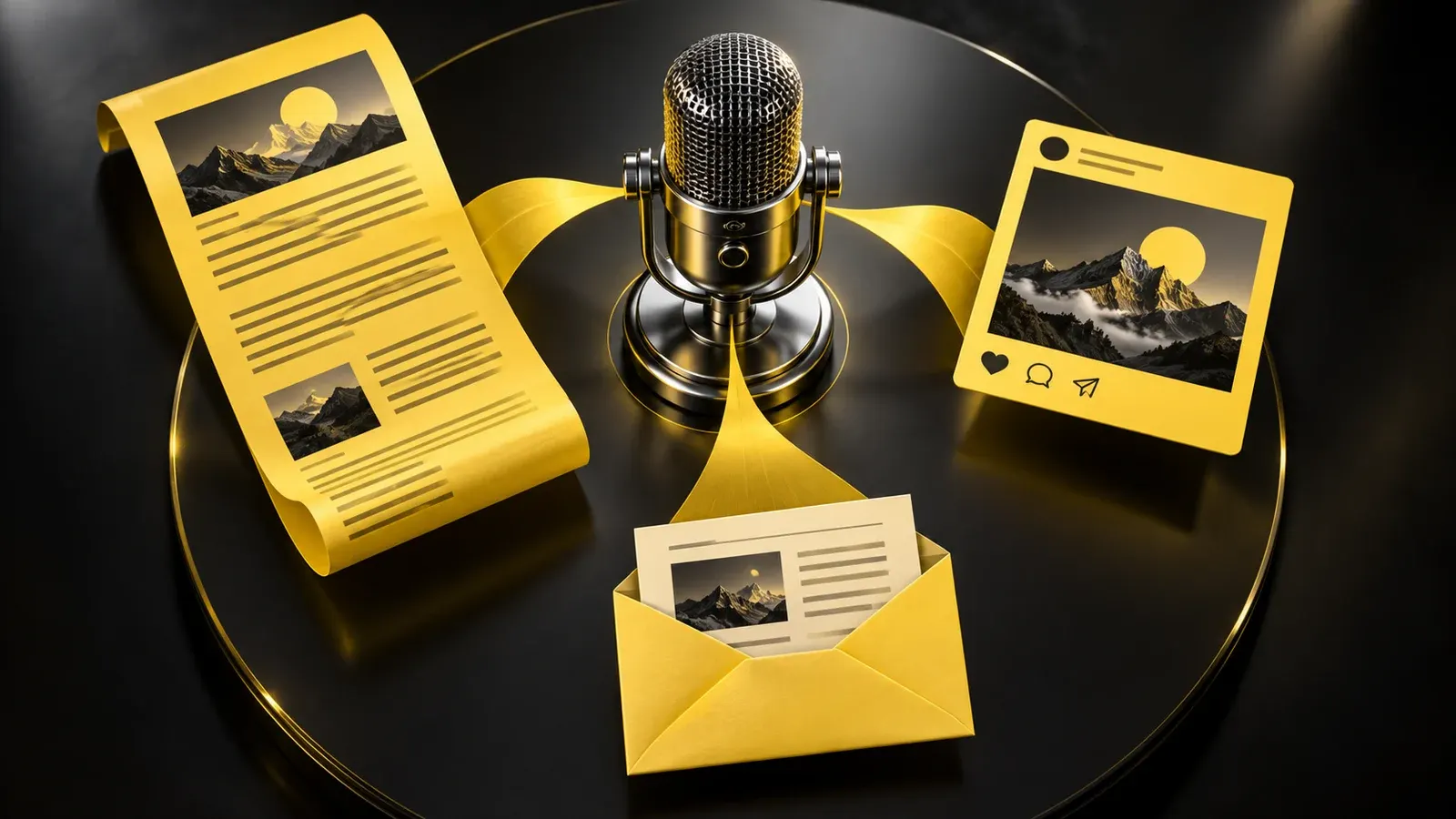
The blog article explains a connected subject in depth. A LinkedIn post can raise one observation for discussion. A newsletter introduces the topic to existing contacts and points to the full explanation. These roles support reuse without distributing the same shortened text everywhere.
Google identifies structuring original material as a useful application of generative AI. An editorial implication is to develop the value of the source material rather than manufacture interchangeable pages. Google’s guidance on AI content
Example: One observation, three useful angles
Imagine an interviewee explaining that a lengthy mobile contact form can discourage enquiries. The blog article examines the path from landing-page visit to successful submission. The LinkedIn post asks which information really belongs in the first conversation. The newsletter encourages readers to try their own enquiry process and notice where it becomes difficult.
This is an illustrative editorial scenario, not a measured conversion result. A real case analysis would need a documented starting point, a described change and an observed outcome. Keeping those categories separate prevents a reasonable recommendation from turning into an unsupported performance claim.
Review before publication
Assign someone to check substance and someone to assess the channel and readability. Include headings, link destinations and image descriptions in the review. W3C recommends meaningful headings and link text as part of accessible web writing. Writing for web accessibility
For German and English versions, adapt sentence structure and examples naturally. Keep the core factual statements in a shared source file. If a specialist later corrects an important point, update both language versions and any derived content that repeats it. This makes multilingual publication manageable rather than dependent on memory.
Make the process repeatable
Keep the source conversation, checked statements, drafts and approval together. Record when the material should next be reviewed. After publication, collect questions from comments and customer conversations; these can reveal where the explanation needs another example.
Our social media service connects this approach with a suitable publication schedule. Copywriting supports longer pieces and a consistent brand voice. The starting point remains your own expertise and a real question from the audience you want to reach.
